Discover more
When Communities Lead: Keyhole Gardens and Climate Resilience in Kenya
In climate-stressed regions, keyhole gardens offer families environmentally friendly ways to grow food.
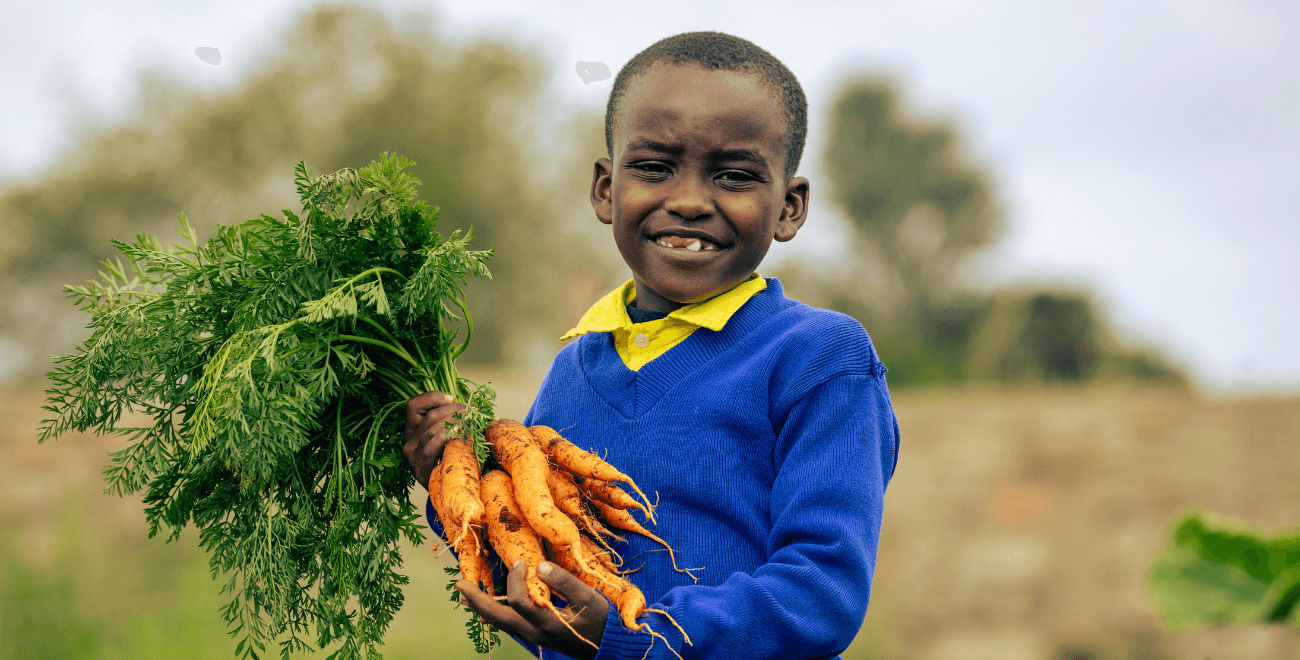
Compassion partners with local churches around the world because they understand their communities best and are dedicated to serving them over the long-term. These relationships allow Compassion to offer support that’s driven by the church and community’s understanding of their contextual needs and challenges.
It also means we can be a helpful link for joining local communities with experts who can facilitate training or provide technical assistance that goes beyond what Compassion could offer alone.
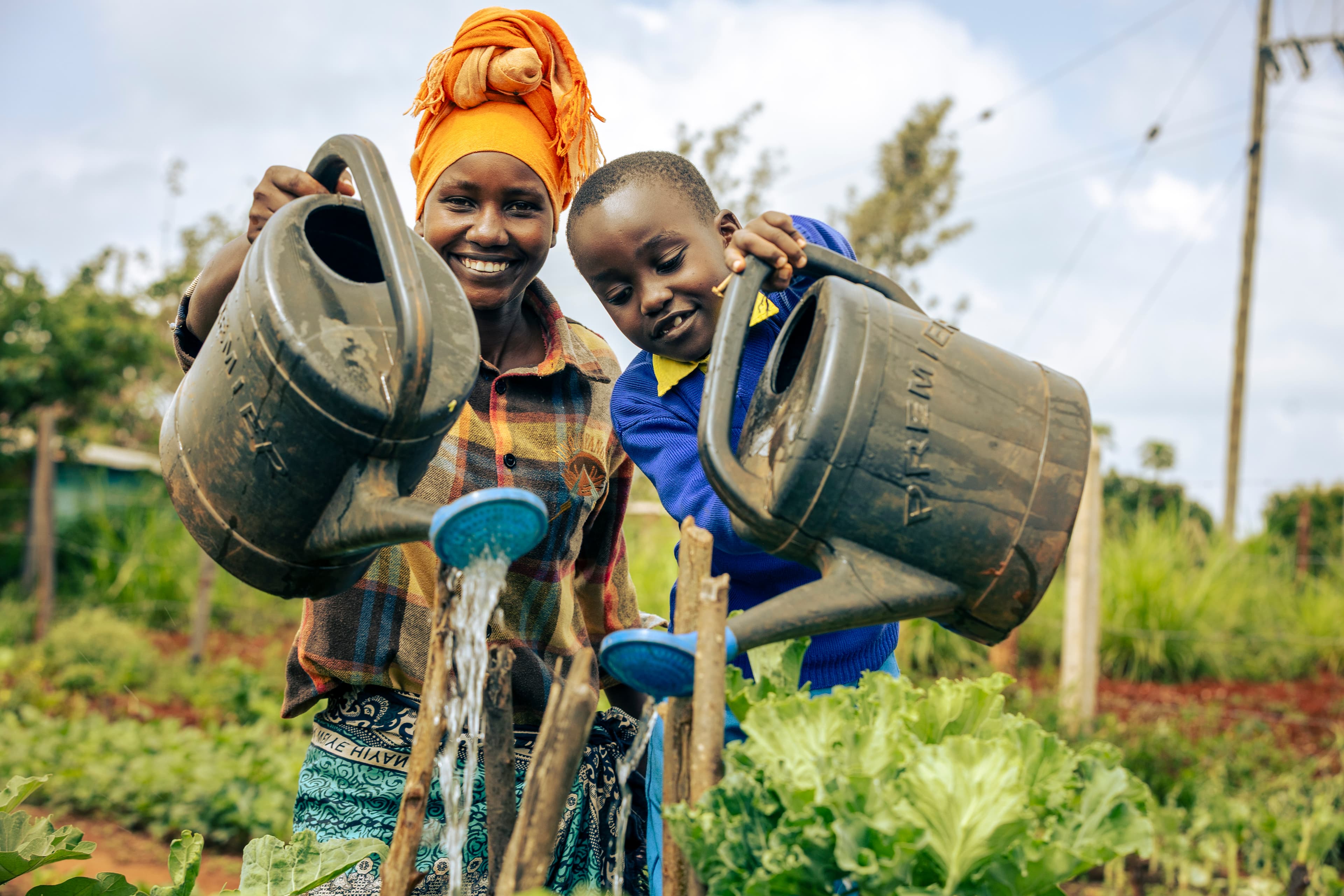
We praise God for these creative partnerships that glorify him and seek the well-being of the children and families we serve above all else. Compassion’s photojournalist in Kenya, Kevin Nyakwada, met with nine-year-old Junior to visit his family’s keyhole garden, which they learned all about through a creative partnership.
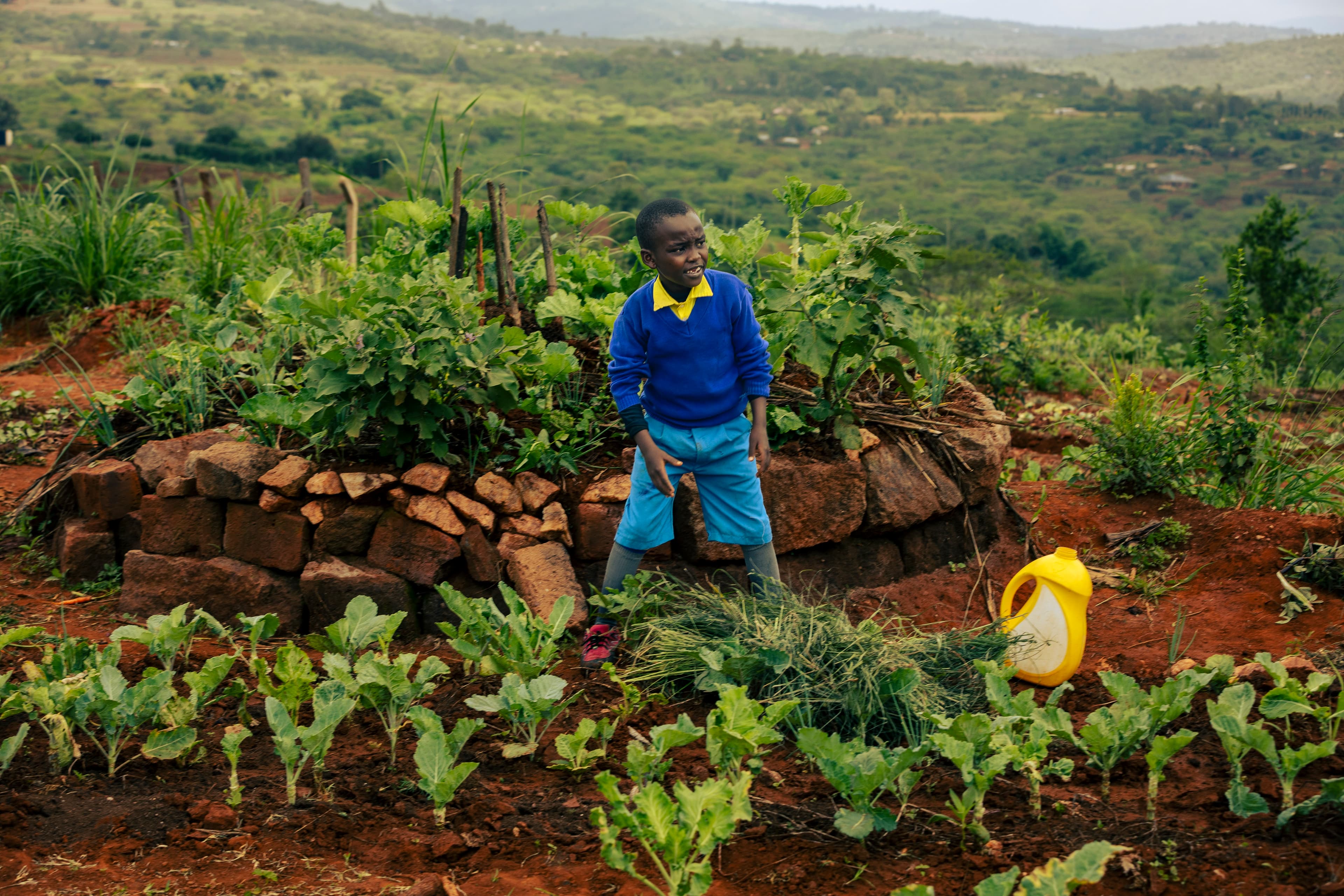
My name is Junior; I am nine years old. I’m a participant at my local Compassion project. At school, they teach us about the alphabet and numbers.
At the church project, they’re teaching us something even bigger: how to be friends with the Earth.
I want to show you my “keyhole garden” and tell you how it’s changing so much for me, my family and my friends.
When hunger sits like a stone
My teachers used to talk with us about the yearly famine in our village, which brought us all deep hunger. It’s the kind of hunger that sits in your stomach like a heavy stone. It’s very hard to focus on the chalkboard when you’re that hungry.
Like lots of people in Kenya, my family used to rely on rain to grow our crops. If the clouds didn’t gather, our plates stayed empty.
We were vulnerable to “climate shocks”, which I learned means the weather doesn’t behave the way it used to.
The ground was hard, and we thought the only way to grow food was to have a huge piece of land and lots of expensive blue bags of chemical fertilizer.
But then, we learned something different.
The key to sustainable gardens
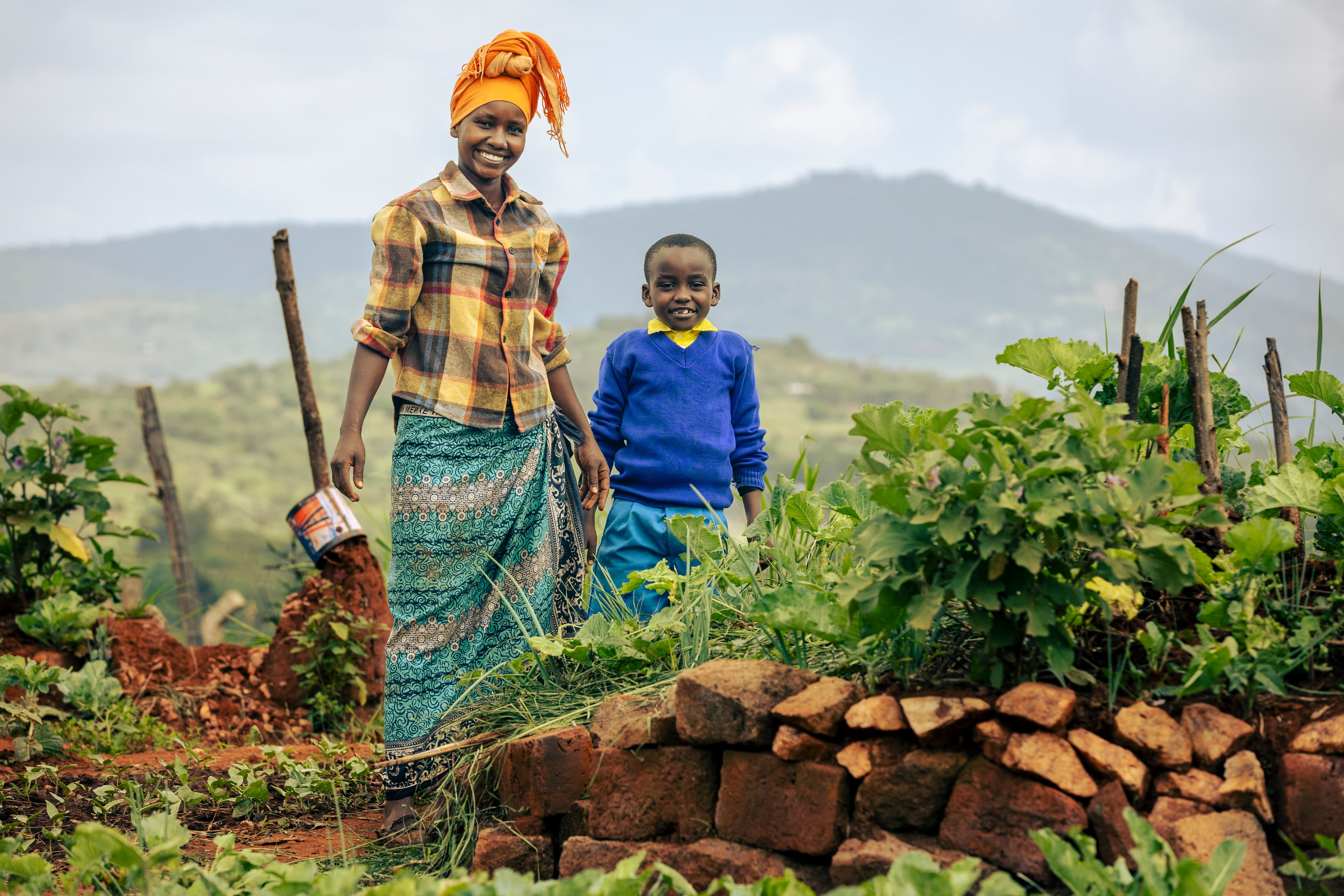
One afternoon, my mum came home from a meeting at the church project. She looked so excited. I hadn’t seen her looking this happy in a long time. She’d met Mercy, one of the church staff workers. She said Mercy was a “Life Garden Champion” trained by the Thrive Institute. She'd learned that people like us didn’t need a big farm or lots of water to feed our family. We just needed a keyhole garden.
I didn’t know what a keyhole garden was, but I helped my mother build it!
First, we cleared a small circle of land. In the very centre, we built a basket made of sticks and mesh. We built up the soil around it, as high as my mother’s waist. We left a small gap in the mound so we could walk right up to the centre basket. From above, it looks exactly like an old-fashioned keyhole in a door.
“Junior,” my mum said as we planted the first seedlings into the earth, “this isn’t just a garden. This is a life-giver.”
The clever thing that makes a keyhole garden work properly is the basket in the middle. At our house, we don’t have a rubbish bin for food waste anymore. Every potato peeling, every scrap of cabbage, and every leftover bit of green goes straight into that basket.
As the kitchen scraps break down, they release their nutrients directly into the soil. The water we pour into the basket carries those nutrients to the roots of our spinach, kale and amaranth.
It means we aren’t just taking food from the earth; we’re giving life back to it.
We’re like doctors who heal soil
I love watching the soil change. It used to be pale and dusty, but now, under the layers of mulch and compost, it’s dark and soft. It’s full of worms and tiny insects and lots of others that are too small to see.
Mercy says that by feeding the soil naturally, we’re restoring the land. It feels good to know that we aren’t hurting the Earth with chemicals. In fact, we’re like doctors helping the Earth get healthy again.
At the project, we’ve learned that God has provided everything we need to protect His creation. And one of the coolest things is knowing we no longer use chemicals. Instead, we make our own natural pesticides.
I help Mum gather pawpaw leaves, garlic, hot chili and a plant called Lantana camara. We mash them up to create a spray that bugs hate, but humans can breathe safely.
When I eat a leaf of spinach straight from the garden, I know it’s pure. Mercy says these vegetables help strengthen my immunity. Vitamins in the vegetables help us fight diseases.
I haven’t felt that heavy hunger stone in my stomach for a long time.
Even dirty water makes a difference
In Kiimakiu, my community, water is like gold. You don’t waste a single drop. This is where the keyhole garden is a genius. The central basket holds moisture, and so our little garden keeps hold of its water.
We‘ve also learned a special trick: we recycle our kitchen water. After my mum finishes washing the dishes or the vegetables, we don’t pour the water on the dry ground. We put in some ashes from the fire (Mercy taught us this adds minerals) and then we pour it into the keyhole basket. It means that nothing is wasted. Even the dirty water from our chores is useful. It becomes the lifeblood of our dinner.
The sky is dry, but our garden is green
Since we started this project, our compound feels different. We have more food, but it’s not just that. My mum isn’t worrying about when our next meal will arrive. Mercy says we have a sustainable livelihood. She says more than half the families in our community have now been trained in gardening.
There are six of us in my family, and often we've got more vegetables than we can eat. When the amaranth grows tall and the kale leaves are as big as my head, Mum sells the extra at market. The money she earns helps buy our schoolbooks and clothes. We went from being hungry to being providers in our community.
Sometimes, our neighbours stop by the fence to look at our green circle. They ask, “Serah, how is your garden so green when the sky is so dry?”
My mum smiles and tells them about the church, the keyhole and how we care for creation. She shows them the manure hole and explains that the better we treat the environment, the better it treats us.
I am only nine, but I feel like a guardian of my garden, the soil and the whole environment.
We have found a way to always have food and a way to live in harmony with the world God made.
Learn more about supporting community interventions.
Words by
Junior, aged nine, as told to Kevin Nyakwada, Kenya
Share:
Share:
Pray with us
Join thousands of people praying to end poverty, take action through our appeals and activities, and be inspired by how God is changing lives.
Get a little Compassion in your inbox with our Prayer and Stories email.
Remember, you can unsubscribe at any time. Please see our Privacy Policy for more information.