Jesus Said, ‘Let the little Children Come to Me’: What Matthew 19:14 Means for Christians Today
Discover the meaning of Matthew 19:14, what Jesus taught about children and how Christians can put his words into action today.
‘Jesus said, “Let the little children come to me, and do not hinder them, for the kingdom of heaven belongs to such as these”’ (Matthew 19:14, NIV).
This one sentence spoken by Jesus is among the most loved in the whole of scripture. But in some older translations, it is also one of the most misunderstood. So, what did Jesus mean when he said, ‘Let the little children come to me’? And why does this short conversation still speak so directly to how we need to view and care for children today?
Matthew 19:13-15 reveals God's heart for children. We see the warmth of Jesus’ welcome to these little ones, the value he placed on them as worthy of his attention and care.
Jesus’ example always has something to teach us as we live out our faith as his followers today, in our homes and in our world, where millions of children are still without the care and support they need to thrive.
As we’ll explore below, understanding what Jesus meant doesn’t just change how we think about children, it also changes what we do.
What does Matthew 19:14 say?
There are some small differences in the way older and more modern New Testament translations phrase this verse. Here are some examples:
‘Jesus said, “Let the little children come to me, and do not hinder them, for the kingdom of heaven belongs to such as these.”’ (New International Version)
‘But Jesus said, “Let the little children come to me and do not hinder them, for to such belongs the kingdom of heaven.”’ (English Standard Version)
‘But Jesus said, Suffer little children, and forbid them not, to come unto me: for of such is the kingdom of heaven.’ (King James Version)
Matthew 19:14 appears in the Holy Bible, in the Gospel written by Matthew, who was one of Jesus’ disciples. It’s one of the clearest examples of Jesus welcoming children with compassion and gentleness.
Although all three translations above have the same meaning, the more modern NIV and ESV use ‘let’ and ‘do not hinder’, while the older KJV uses ‘suffer little children’. We’ll examine the meaning of this phrase below.
What is the meaning of Matthew 19:14
In Matthew 19:14, Jesus welcomes the children his disciples had tried to turn away, telling them, ‘Let the little children come to me, and do not hinder them.’ He teaches that the kingdom of heaven belongs to those with childlike faith: humble, trusting and wholly dependent on God.
The verse shows how deeply God treasures children, in contrast with the dismissive way society often views them. We can see this as a call for all believers to follow Jesus’ lead in welcoming and caring for children today.
What was happening in Matthew 19?
To explore the verses as part of a fuller Bible study, it’s helpful to look at the passage in context.
The gospels offer four historical accounts of Jesus’ life and ministry, when he came to earth to show God’s love and bring salvation for humanity.
In this passage, Jesus is in the midst of a busy period of his ministry. Matthew 19 starts with Jesus being followed by large crowds of people, many of whom he healed. He’s then tested by the Pharisees, who were asking him difficult questions to try to catch him out. It’s after this that people brought their little children to Jesus so he could pray for them. The disciples tried to send them away, but Jesus stopped the disciples and told them to let the children come to him. He ‘placed his hands on them’, meaning that he blessed them and prayed for them, and said that ‘the kingdom of heaven belongs to such as these’ – that is, the children mattered no less than the self-important Pharisees or the adults who had followed him and listened to his teaching.
This moment matters because it shows us what Jesus values. He is not concerned with status or with what society says a person is worth. Instead, Jesus' concern is for those who are vulnerable and overlooked. He stops to challenge the disciples' assumptions about who deserves his attention, then takes time to bless the children, demonstrating his love for them and affirming their place in his kingdom.
The same scene is also recorded in Mark 10:13–16 and Luke 18:15–17.
Why did Jesus welcome children?
In the first-century Judean society in which Jesus and the disciples lived, children were treated as having low status. They were seen in terms of what they’d be able to contribute as part of the workforce when they were older. While they were small, they were considered to have little value.

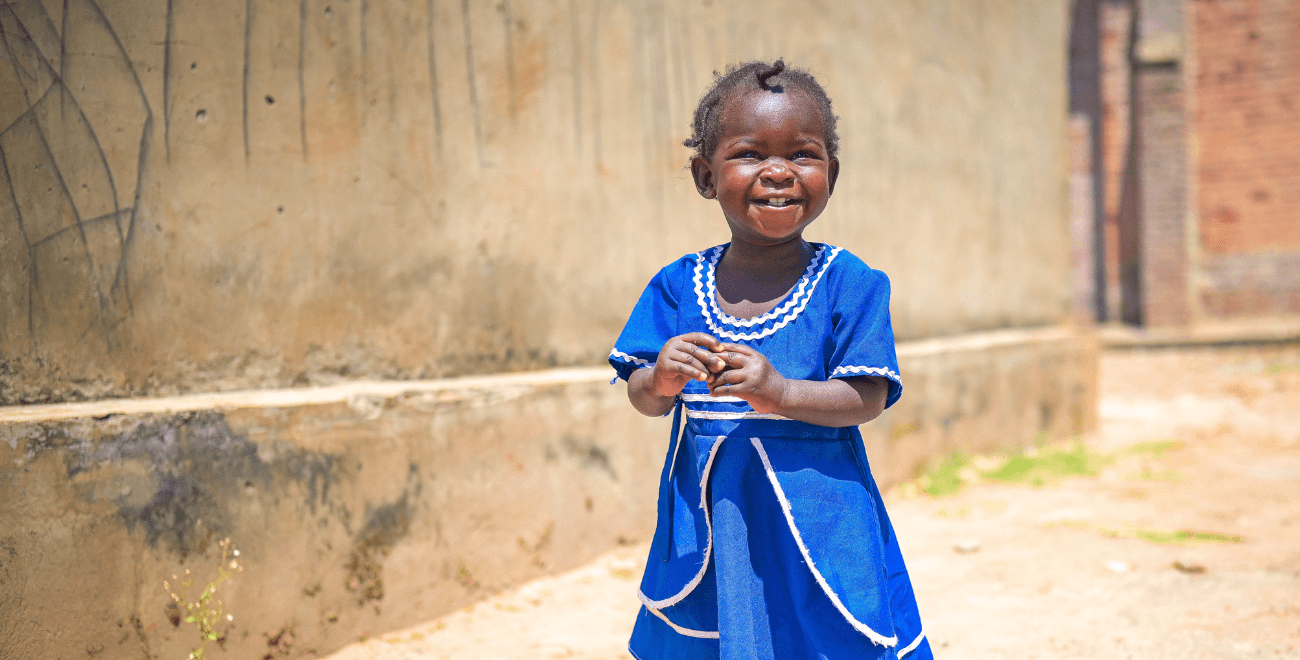
Smiling children reflecting Jesus' heart
Jesus rejected this perspective. He had compassion for those society didn’t respect, concern for the vulnerable and care for the dignity and worth of the children and all who were overlooked by those around them.
Matthew 19:14 shows us that children matter to Jesus as they are now, not for what they contribute, but as people of inherent worth, made in the image of God and belonging to him. (This theme is found throughout the Bible. For more, explore these Bible verses about God’s heart for children.)
What did Jesus mean by “Let the little children come to me”?
As well as correcting his disciples, Jesus made sure the children and their families knew they were welcome, even though their community considered them unimportant. He also used the moment to teach that we should come to God with childlike trust, humility and dependence, receiving the kingdom as a gift rather than earning it.
This childlike approach isn’t just something to admire; it should shape how we live. A childlike dependency on God allows us to enjoy life in all its fullness. Coming to God with trust means bringing him our worries in prayer rather than trying to manage everything in our own strength.
Humility means being willing to listen, to say sorry and to serve quietly without needing to be noticed. Dependence means holding our plans a little more loosely, trusting God with the things we can’t control.
In practice, this might look like praying honestly when life feels uncertain, forgiving someone who has wronged us, giving without waiting for thanks, or making time for the people the world tends to overlook, just as Jesus made time for children.
What did Jesus mean by ‘suffer the little children’?
In Matthew 19:14, ‘suffer’ simply means ‘allow’, ‘permit’ or ‘tolerate’. Older translations, such as the KJV, use the word because it carried this meaning when they were written, but we rarely use it this way in modern English, and so it can cause confusion. It doesn’t mean that Jesus intended for children to ‘suffer’ in the modern understanding of that word.
Many modern translations use ‘let’ instead, such as the NIV, which says: ‘Jesus said “Let the little children come to me, and do not hinder them”.’
By saying this, Jesus is teaching that children belong in his kingdom and should be included in the life of the community.
What can Christians learn from Matthew 19:14 today?
Jesus’s teaching was intended for us to live out, not just think about. As Christians, we’re encouraged to take children seriously, and to view them compassionately, just as Jesus did. This means:
welcoming children into the life of our churches and communities
valuing children for who they are, honouring their dignity and worth as people made in God’s image
protecting children and taking their safety and wellbeing seriously
supporting families by coming alongside parents and carers
advocating for vulnerable children and ensuring they’re not overlooked
In other words, Matthew 19:14 asks us to follow Jesus’ lead and see children the way Jesus saw them. When we do, it changes how we act, not just to the children in our own homes, churches, and communities, but worldwide.
How can we help children flourish today?
Jesus didn’t only teach about what he valued. He demonstrated his love by putting his words into action. We’re called to do likewise (see James 1:22 and 27).
What does this mean in practice?
Jesus made time for children. In a culture that often overlooked children, Jesus did the opposite. He welcomed them, blessed them and showed just how precious they are to God.
His heart for children continues to shape the work we do today, as we seek to follow his lead in all we say and do. Caring for children as Jesus did means nurturing and helping them to flourish. This includes ensuring they have access to education, good nutrition, physical and psychological safety, emotional wellbeing, and spiritual encouragement.
For millions of children around the world, poverty is what stands in the way. Poverty prevents children from attending school. It leaves them without enough food. It may mean they’re unsafe. It might even wrongly imply that they don’t matter enough to receive more. Yet Jesus never treated children as an afterthought. He saw their worth, dignity and potential, and we believe every child deserves to be seen that way too.
So, how do we show this care that Jesus demonstrated so naturally and generously?
One way to do this is through child sponsorship, which lays these vital foundations for both the sponsored child and others in their community. Supporting children to receive practical, emotional, and physical support through their local church shows the child, their family, and their community just how much they matter to God. It's a practical expression of what Jesus demonstrated time and again: children matter. Sponsorship can help a child feel known, loved and protected.
Living out Jesus’ words through child sponsorship
In Matthew 19:14, Jesus didn't only tolerate the children who were brought to him, he actively welcomed them, blessed them and held them up as a picture of God’s kingdom. In a world that considered them unimportant, Jesus showed just how precious they are to God.
We have an opportunity to follow Jesus’ example and to reflect his love for children today. Just as he welcomed and made time for children, we can help ensure that more children experience that same love and care.
Sponsoring a child is a great way to respond with practical care. It’s a way of letting one more child be welcomed by Jesus, of helping them experience the support, opportunity and hope that every child deserves, helping them know how deeply they’re loved by God.
Sponsoring a child through Compassion means that they’ll receive nutritional support and regular medical check-ups. They’ll be able to go to school, receiving an education that will equip them for their future. They’ll experience the support of their local church community, showing them Jesus’s love in tangible ways. Get a taster of the care and value children receive by experiencing a typical project day at a church in Tanzania:
Sponsorship is personal. For a child, it's a powerful reminder that they are not forgotten. They are known, valued and loved. You’re matched with one particular child, and you can write to one another and pray for each other. For the child, it’s the difference between being one of many and being remembered by name.
Frequently asked questions about Matthew 19:14
What is the meaning of Matthew 19:14?
In Matthew 19:14, Jesus demonstrates the care he has for children by telling the disciples to allow them to come to him so that he can bless them. He says that the kingdom of God belongs to people like these children: people who might be overlooked and undervalued by society. Jesus sees and treasures them and tells us to do the same.
What did Jesus mean by ‘Let the little children come to me’?
Jesus meant that his disciples should allow the children to be brought to him to receive his blessing. He valued them and considered them important.
What did Jesus mean by ‘Suffer the little children’?
Jesus meant that the children should be allowed to come to him. ‘Suffer’ in older translations of Matthew 19:14 means to permit, allow, or tolerate. It doesn’t mean that children should suffer in the modern sense of the word.
Why did Jesus bless children?
Jesus blessed the children because he values them as members of the kingdom of God. Blessing them made this clear to both the children and to the watching adults, showing that his values were different to those of the culture and society.
What does Jesus mean by “the least of these”?
Jesus consistently showed concern for people whom society overlooked or considered unimportant. In Luke 9:48 (NIV), he says: “Whoever welcomes this little child in my name welcomes me; and whoever welcomes me welcomes the one who sent me. For it is the one who is least among you all who is the greatest.” Jesus isn’t saying that some people have less value than others. Instead, he challenges worldly ideas about status and importance, showing that those whom society considers "the least" are precious in God's sight. His followers are called to welcome and value "the least of these" just as he did.
Why is humility important in Christianity?
Humility is important because it reflects the character of Jesus, and Jesus uses children as an example for adult Christians to follow in their dependence and need for provision and protection.
In Matthew 18:4, Jesus teaches that “whoever takes the lowly position of this child is the greatest in the kingdom of heaven.” The apostle Paul explains that Jesus humbles himself by laying aside his glory and ‘becoming obedient to death, even death on a cross’ (Philippians 2:5–8).
Christians are called to follow his example, putting aside pride and status to serve others with love.
What can Christians learn from Matthew 19:14?
Matthew 19:14 asks us to see children the way Jesus saw them: as valuable members of his kingdom and of our communities. He calls us to welcome them, value them, support them, protect them and advocate for them. One practical way we can do this is through child sponsorship.
Jesus didn’t just make room for children two thousand years ago. He showed us how much they matter to God, and invited us to follow his example. Whether in our own homes and churches, or in communities on the other side of the world, each of us can play a part in letting the children come to him.
Words by
Compassion UK
Share:
Share: