Discover more
What is Poverty? The Definitions of Poverty
Poverty is far more complex than a number. Poverty has a face and a name.
What is poverty?
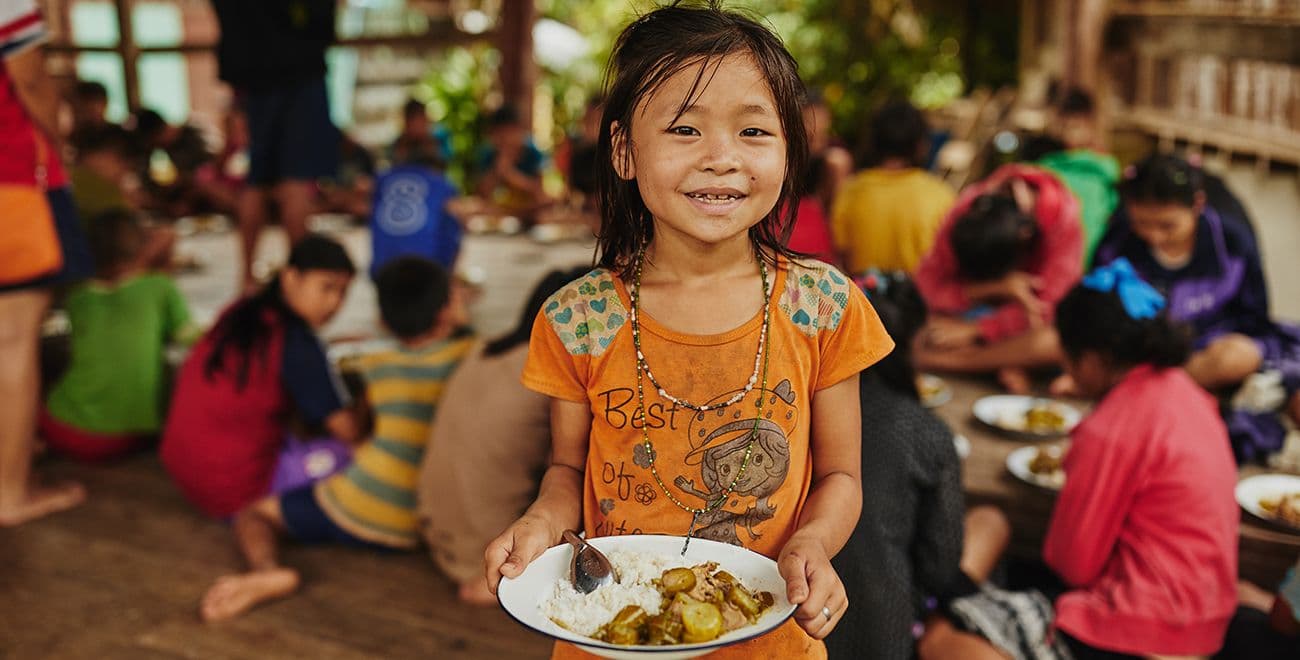
When we think about poverty, we usually think about economics. In reality, poverty has a face. It’s a girl forced to marry because her family can’t support her. A mum who can’t buy medicine to save her baby’s life. A boy sent to work on the rubbish heap, rather than the classroom.
What’s the official definition of poverty?
The World Bank‘s poverty definition says, “A person is considered poor if his or her income level falls below some minimum level necessary to meet basic needs.” It sets this minimum level, or international poverty line, as living on less than $3 a day (2021 PPP*).
Poverty facts
According to UNICEF, 412 million children are living in extreme poverty worldwide.
About 13,000 children die each day before celebrating their fifth birthday, mostly from preventable causes.
Over the past 50 years, global immunisation efforts have saved an estimated 154 million lives, equivalent to around six lives every minute over that period, preventing millions of child deaths each year with the WHO saying it should be possible to save millions more.
On average, children born into the poorest 20 percent of households are almost twice as likely to die before age 5 as those born into the richest 20 percent.
Each year, about 100 million are forced into extreme poverty as a result of health-related expenses.
According to the World Bank, around 831 million people still live in extreme poverty and hundreds of millions suffer from chronic hunger.
Children are more than twice as likely to live in extreme poverty than adults.
At current trends, 90% of the world’s children living in extreme poverty will be in sub-Saharan Africa in 2030.
What’s the difference between absolute poverty and relative poverty?
Relative poverty considers your location and what it means to be poor in a particular society. It measures if your income falls below the minimum amount needed for you to maintain the average standard of living in the society you live in.
On the other hand, the World Bank tracks extreme poverty using an international poverty line. Rather than measuring poverty against the rest of the population, poverty is measured against a fixed standard of living. In June 2025, the World Bank set a new global poverty line at $3 a day (sometimes expressed as approximately £2.26 but this is not a direct currency conversion).
While both definitions are valuable, they view poverty through a single lens of income and consumption. In reality, poverty is far more complex and involves other social, cultural and political aspects.
Beyond material hardship, poverty shapes how children and families see themselves and their future. Constant struggle can strip away hope and confidence, making it feel impossible to believe that life can change.
Do age and gender impact poverty?
For certain members of society, mainly women and children, they may already lack political, social or economic rights meaning poverty places a double burden on them, making them even more vulnerable. Globally, 1 in 5 girls are married before age 18, ending their chances of an education.
What does poverty mean for children?
Almost half of the estimated 831 million people who live in extreme poverty are children.
Children are left most vulnerable to the effects of poverty: from the moment their life begins, a child’s future is shaped by their environment.
Poverty can rob children of their basic rights. There’s significant evidence to show that poverty can have devastating short and long-term effects on a child’s ability to learn, build relationships and make a positive transition to adult life.
According to UNICEF, “The consequences of inadequate nutrition, lack of early stimulation and learning, and exposure to stress last a lifetime. ” If they have families of their own, there is a high probability that poverty will be passed down to future generations.
What is a poverty line and how is it calculated?
If a person’s income is ‘below the poverty line’ in their country, it means they don’t have enough money to meet their minimum needs for nutrition, clothing and shelter. Poverty lines are different in each country, higher in richer countries and lower in poorer countries.
What is the international poverty line?
Each country has a different poverty line. To make easier comparisons, the World Bank updated the global poverty line of $3 per day (2021 PPP*) in 2025.
What is the poverty line in the UK?
The Joseph Rowntree Foundation defines the poverty line in the UK as households earning less than 60% of the median income. They say that current findings suggest that poverty is deepening in the UK, with an estimated 3 in 10 children living in poverty.
Has progress been made in the fight against poverty?
There have been great successes in the fight against poverty in the past 35 years:
The Make Poverty History campaign in 2005 united global leaders to help.
Extreme poverty has declined by more than half, from 1.9 billion people in 1990 to 831 million in 2025.
The global poverty rate is now lower than it has ever been in recorded history, but since Covid-19 the rate of progress has slowed and even worsened in certain areas.
Many more girls are now in school compared to 15 years ago. These regions as a whole achieved the Millennium Development Goal target to eliminate gender disparity in primary, secondary and tertiary education.
But there’s still a long way to go:
Globally, 412 million children are still living in extreme poverty (on less than $3 a day). This is an updated benchmark that was set from June 2025, which replaced the previous $2.15 a day figure when 333 million children where said to live in extreme poverty in 2022.
Despite the tremendous progress, poverty rates remain stubbornly high in low-income countries and those affected by conflict and political upheaval.
What are the sustainable development goals?
The Sustainable Development Goals were adopted by world leaders in September 2015 at an historic UN summit. The SDGs build on the success of the Millennium Development Goals, and aim to go further in ending poverty while protecting the planet for the future.
Each goal must be achieved by 2030.
No poverty
Zero hunger
Good health and wellbeing
Quality education
Gender equality
Clean water and sanitation
Affordable and clean energy
Decent work and economic growth
Industry, innovation and infrastructure
Reduced inequalities
Sustainable cities and communities
Responsible production and consumption
Climate action
Life below water
Life on land
Peace, justice and strong institutions
Partnerships for the goals
Could you survive living in poverty? Lance’s story
Could you imagine feeding your family of seven on £4.50 a day? What would you do on the days there was no money for food? For Lance and his family, this is their daily reality of living below the poverty line.
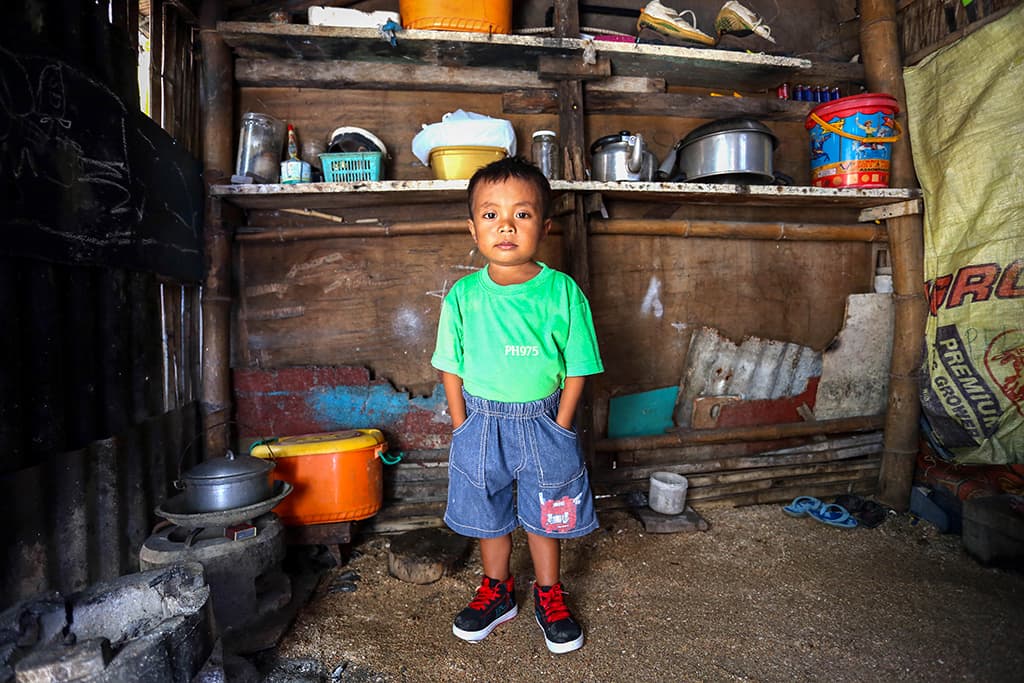
Lance’s father, a fisherman, paddles to sea in a tiny canoe very early every morning to fish for 10 hours, but he must fish close to the shore since his boat is not motorised. “It’s too risky for him to go further out,” Lance’s mum, Joan, says. “He doesn’t catch many big fish but I do my best to sell them in the afternoon so we have money to buy food and send our older children to school.”
The most money Lance’s hard-working parents can make is 300 Philippine Pesos per day (£4.50), but sometimes they earn nothing. “On such days, we just eat the fish before it goes rotten as we don’t have electricity or a cooler to store it,” says Joan.
When families are caught in crippling poverty like this, growing children miss out on important nutrients, leading to malnutrition and stunted growth.
For years, Lance was too weak to lift himself up and walk. Lance was eight years old at the time, but he was the size of a four-year-old.
This changed for Lance when he was registered at a Compassion project and found a child sponsor. The project staff helped Lance to get immediate medical attention where he was diagnosed with acute malnutrition.
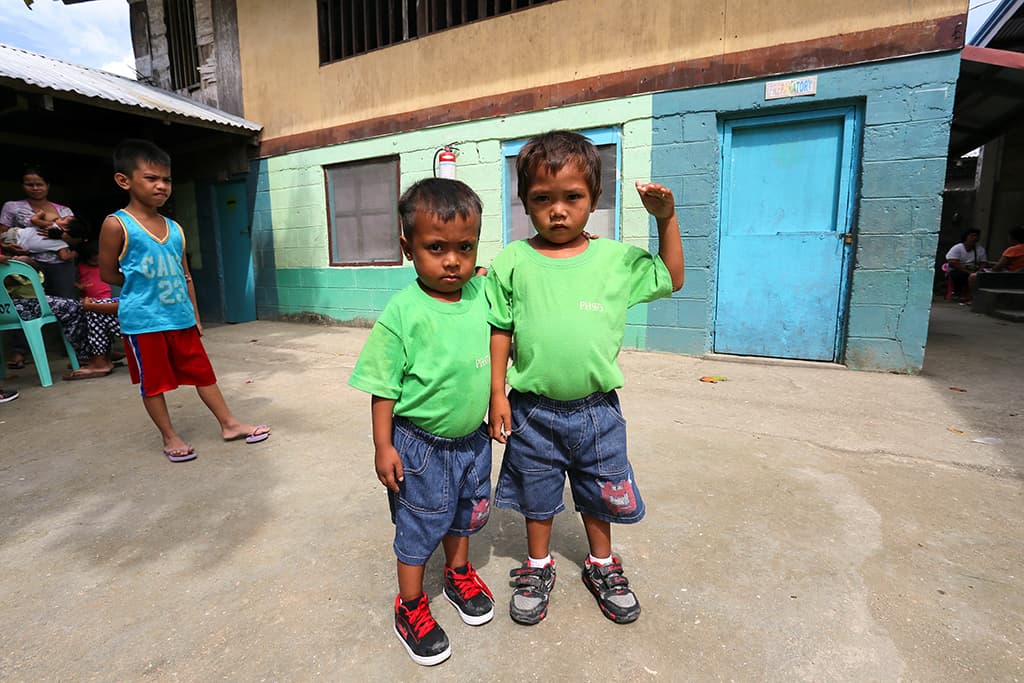
After a consultation with specialists, Lance was given a meal and vitamin schedule and the project staff went to extraordinary lengths to ensure the young boy remained on his meal schedule.
Collins’ story
Collins and his grandmother, Nachi, live in the Solai District in northwest Kenya. Together, they’ve endured unimaginable grief and hardship because of poverty. Despite being in her sixties Nachi still does intense manual labour to provide for Collins. But back pain, swollen hands and feet don’t support her long enough to earn a decent wage.
“We face a lot of hardship because we don’t always have enough to eat. But then I remembered Compassion projects help children.”
“Before I took Collins to the project, all I felt was despair. I was sure we would both die of starvation. But Because of Compassion I can see he will have a brighter future. If I was to meet his sponsor one day, I wouldn’t have the words to express [how I feel]. But if she looked into my heart, the sponsor would see only joy,” says Nachi.
Can poverty be stopped?
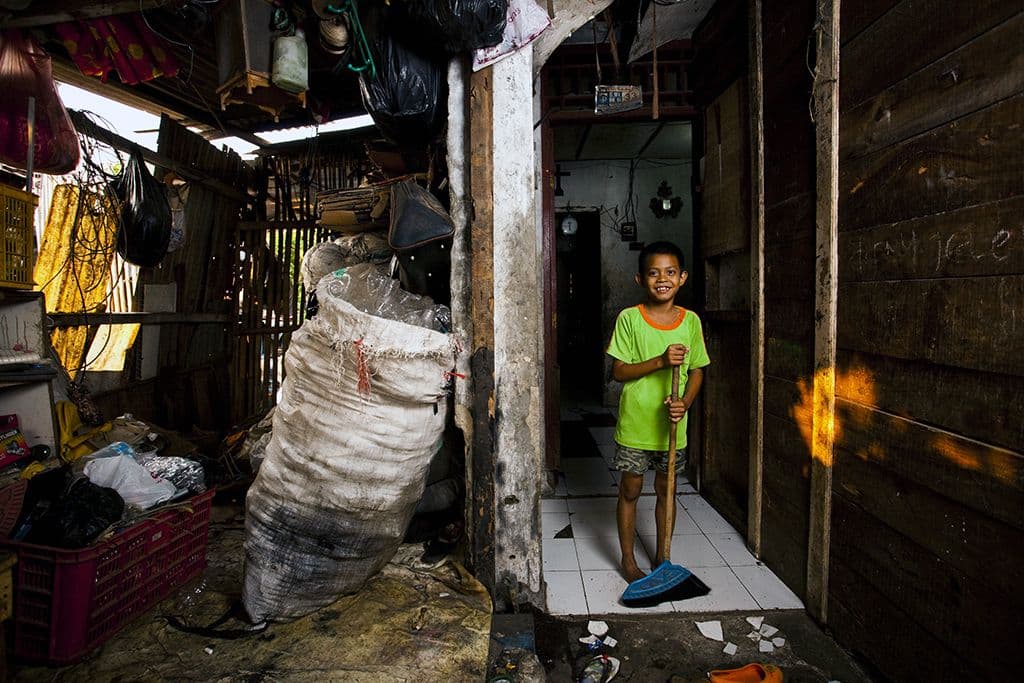
The great news is that extreme poverty has fallen dramatically over the past generation. Around 2.3 billion people lived in extreme poverty in 1990; by 2024–25, that number had fallen to around 830 million. That means roughly 1.5 billion people have escaped the very worst forms of poverty in just over three decades.
Progress has slowed in recent years, but we can see from these figures that poverty is not inevitable. When we assume it will always exist, we’re less likely to act, yet the evidence tells us that change is possible when the world chooses it.
But by taking a stand against poverty together we can make a difference.
Compassion’s response to global poverty
Poverty can often feel overwhelming. When we hear that 412 million children still live in extreme poverty we can wonder what difference we can really make.
That’s why we’re offering you the chance to sponsor a child – a highly strategic way of ending poverty, one child at a time. You can meets the real-life needs of a child living in poverty by tackling the root causes of poverty that hold them back.
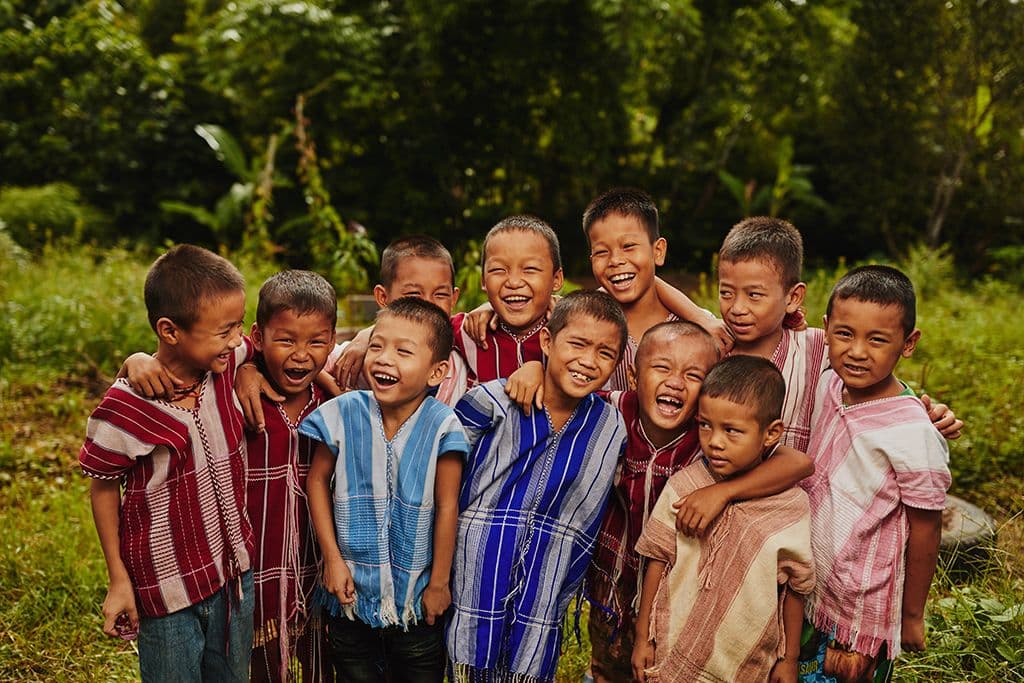
Compassion connects one child born into the vulnerability of poverty with one sponsor, like you. You can give a child the opportunities they deserve by sending them to school, providing them with nutritious meals and protecting their health with regular medical check-ups.
Sources: UNICEF, Ending Extreme Poverty, UNICEF, The State of The World’s Children, Millennium Development Goals Report
*See World Bank fact page about Global Poverty Lines and use of 2021 PPP (Purchasing Power Parity)
Words by
Emily Laramy
Share:
Share:
Pray with us
Join thousands of people praying to end poverty, take action through our appeals and activities, and be inspired by how God is changing lives.
Get a little Compassion in your inbox with our Prayer and Stories email.
Remember, you can unsubscribe at any time. Please see our Privacy Policy for more information.